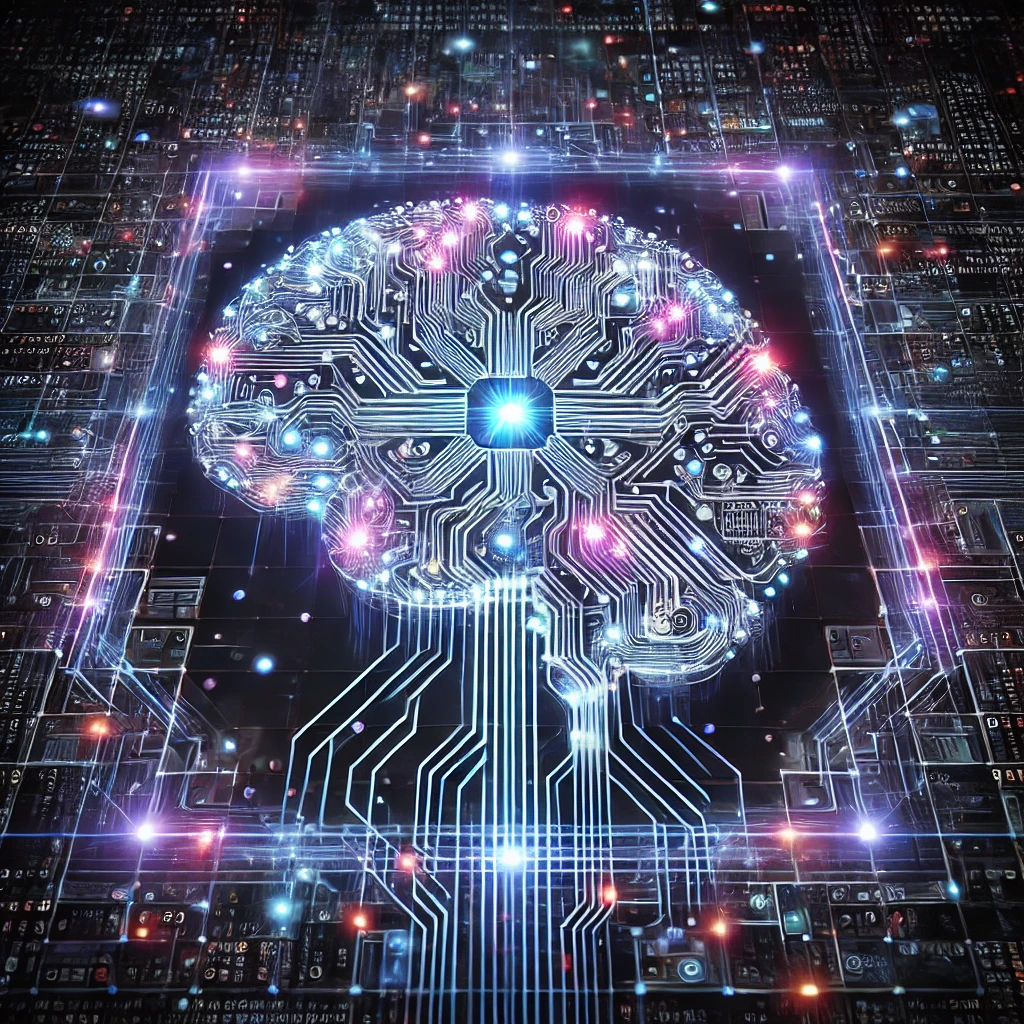
Today, anyone with an internet connection can access a generative artificial intelligence with the ability to write an essay instantly. Such a powerful tool causes widespread fear across the globe as we speculate for the future. Many would see this technology terminated fearing the unattended consequences of incorporating AI into our lives too high a risk. While this argument has merit, attempting to ban AI is Futile, as it already has too tight a grasp on society. The only way forward, is to learn about AI, and understand the changes that will occur in the writing we see in society.
The fear surrounding generative AI is warranted. The mathematical and technological concepts used to design AI are understood by few making the technology feel alien. Many fear the overuse of generative AI will lead to an internet over-flow of non-human scripture. For the Atlantic, in yet another attempt to convince us the world is ending, Matthew Kirschenbaum. writes, “It is easy to imagine a set-up wherein machines could prompt other machines to put out text ad infinitum, flooding the internet with synthetic text devoid of human agency or intent: gray goo, but for the written world” (Kirschenbaum). He urges us to consider the unintended consequences of generative AI. If the internet is full of programed template-writing, we will seldom find man-made words in the clutter, oversimplifying the writing seen in society. Kirschenbaum further solidifies his point when he states, “writing is often unglamorous. It is a labor; it is a job that has to get done… that enormous mid-range of workday writing-content-is where AI is already starting to take hold” (Kirschenbaum). He suggests is that Humanity’s natural urge to cut corners will lead to the downfall of creative writing. Despite this, Kirschenbaum’s image of a dystopian future blinds him from understanding how AI is run and maintained.
Much of the fear surrounding AI lies in a lack of understanding to the shear amount of human incorporated into the inner workings of the technology. Dr. Mark Sample argues, “the way [AI is] portrayed in the media, is not how it is in real life.” (Sample), And that “Your AI is Human every step of the way” (Sample). He explains how AI uses large language models which rearrange what humans have already written to synthesize new essays answering a prompt. AI seems less scary when understood as a word generator, basing its work off existing human text. I have tried this myself. I Asked the AI tool, Chat GPT to write a speech based off Martin Luther King Jr’s writing style. The essay produced was a fiery speech promoting equality and justice for all. powerful metaphors, rhythm, and repetition were littered throughout the essay as if it were written by MLK himself. ChatGPT simply took the patterns found MLK’s writing found on the internet and applied his style to fit the prompt. additionally, Sample eases your conscious further when he exposes the vast amount of human labor needed to keep these AI tools up to date and filtered with accurate, appropriate sources. He explains that AI tools cannot pull new information off the internet alone but instead, human workers provide the information to a language model the AI then uses. The knowledge that AI is completely reliant on human control counters the fearful injunction seen in Kirschenbaum’s writing. If Sample’s findings are right about the inherent humanity within these AI tools, as I believe they exist, we need to reassess our outlook on AI and acknowledge this change will not lead to the downfall of human creative writing.
The answers to our questions do not lie in the suppression of AI tools. They are already too accessible for this to even be a discussion. The question still stands however: will AI leave communication in taters, or elevate creativity? Though I do disagree with much Kirschenbaum states, I fully endorse his conclusion that the overuse of AI tools in writing will result in an increase of mundane, uninspiring works. I find his cautionary statements impactful and thought-provoking, but not realistic. On the other hand, I believe that AI, understood correctly, as a remixer to what has already been written, makes for a powerful tool in the arsenal of a writer looking for fresh perspective for their writing. AI will be both used and abused, but the former will add to the great works of history, whilst the latter will add to the clutter already in existence. I prefer to learn and adapt to the new AI world rather than fight progress.
(Alina and Will)
Works Cited
ChatGPT, 16 September version 3, OpenAI, 16 September 2024, chatgpt.openai.com used to highlight unnecessary passive voice
ChatGPT, 28 September version 3, OpenAI, 28 September 2024, chatgpt.openai used to experiment with AI’s language patterning
ChatGPT, 28 September version 3, OpenAI, 28 September 2024, chatgpt.openai used to generate a picture of “humanized AI”
Churchill, Suzanne, professor of Writing at Davidson College, “presentation Ethos, Pathos, and Logos” writing 101 lecture, Building Stories, Davidson, North Carolina
Kirschenbaum, Matthew. “Prepare for the Textpocalypse.” AI Ushering in a Textocalypse , Atlantic Media Company, 8 Mar. 2023,
Sampler, Mark, professor of digital studies at Davidson College, “presentation on AI research ” Writing 101 lecture, Building stories with Dr. Suzanne Churchill, Davidson, North Carolina
Honor Code Pledge:
On my honor I have neither given nor received unauthorized information regarding this work, I have followed and will continue to observe all regulations regarding it, and I am unaware of any violation of the Honor Code by others.