
Essay 2 draft (The Vienna Vignette)

From romantic novels to country folk music, we are conditioned in western society to notice small side plots and expect them to come back full circle at the conclusion of a story. So why does Mohsin Hamid break this inclination in his 2017 novel Exit West? The story includes miniature vignettes sprinkled throughout the plot at random points never to show up again. There is a certain disappointment with the conclusion as the expectation of the vignettes resurfacing is diminished. Why did Homid choose to format his novel this way? Nasia Anam in her article “The migrant as a colonist” believes this structure works well by breaking the convention of a general novel and exposing the struggle between migrants and nativists in a way not seen in the primary plot. On the other hand, Yogita Goyal in her Article “We are all Migrants” argues this approach as unethical as it oversimplifies the current refugee crisis and takes away the geopolitical context needed to fully develop a sound discussion. In this essay I will examine how one particular vignette set in Vienna, Austria differentiates itself from the rest by tying back to the main plot, and by attempting to illustrate the brutal conflict between nativists and migrants.

In order to fully understand how Hamid’s vignettes relate to the novel as a whole, we will have to take a deep dive into how the content is encompassed within them. Each vignette brings the primary plot with Nadia and Saeed to a halt and describes an event happening between people somewhere else in the world who have walked through magical doors featured in the novel. These magic doors transport a person to another part of the world instantly creating a mass global migration to western nations. While some vignettes explore how people tend to negatively label others based on appearances, others explore how open-mindedness can lead to cooperation. Each story includes magic doors and the people who use them to seek a better life elsewhere in the world. Essentially these vignettes attempt to generate themes based on the effectiveness of unity and peace to strengthen Hamid’s position in the primary plot that nativists and migrants can merge into a functioning society.

There are differing opinions as to the effectiveness of Hamids Vignettes and whether they accurately portray the issues of migration. Nasia Anam in her article The Migrant as Colonist argues the style in Exit West accurately portrays the conflict that comes with migration. She focuses on the supposed western nativist’s point of view, defining the concerns surrounding a migrant takeover of western civilization as a dystopian future. She writes “And so, it is more illuminating to consider the way the novel approaches the question of apocalypse: not as the end of civilization… rather the apocalypse becomes quotidian, arbitrary, manageable” (Anam). She sees this novel as an accurate speculation into a future with no more nations and a complete homogenization of people and culture. She believes the novel rightfully assures the reader that humans have the capability to cooperate even when originating from separate cultures and nations “defusing the apocalypse”.  Yogita Goyal does not endorse this sentiment in “We are all Migrants”, instead claiming that the vignettes make the issues of migration appear far too easy for the western reader. Goyal argues the vignettes only serve to build upon the sentiment that cooperation can lead to a unified world without borders, but they never tackle the reality of migration issues today in their geo-political contexts. She writes “such asides smooth out all the rough edges of migration, superseding a conversation about the vast disparity in experiences of travel to simply insist on copresence in space and time” (Goyal). She essentially believes that the use of the magic doors in Exit West to be too far detached from the complex politics regarding migration across borders. So, if Hamid’s goal with this novel is in fact to create a speculative fictional work that relates to modern migration issues, he has failed in building a world related to our own.

A vignette from novel that deserves special attention takes place in Vienna Austria. An unnamed woman witnesses a massacre by a military force in the public streets due to migration into the city from the magic doors. The story applies historical context to the story exposing how while the conflict was chaotic, it was not in comparison to the world wars of the earlier century. In addition to this, the vignette is successful in decentralizing the main characters by creating a scene specifically illustrating the grievances of Nativists and migrants, helping the reader understand the scale of the consequences seen with the doors. The story also stands alone in being the only vignette relating back to the main the main plot when Saeed and Nadia read about the Vienna riots in the paper. The only hiccup comes at the end of the vignette when at the climax of civil unrest, the fighting stops. The nativists and the Migrants leave peacefully. This strain of events is as fictional as the magic doors themselves. In a real-world scenario, extreme fighting would ensue between nativists who wished to protect their own, and migrants who sought a better life. This ties directly back to Goyal’s statements in which the novel is too detached from modern global migration issues, instead attempting to force an unrealistic narrative in which we could all get along if we just set our differences aside.

               In conclusion, the Vienna Vignette fills the role of linking back to the main plot full circle as the reader would expect but fails in creating a valid argument for Hamid pertaining to speculative peace in a borderless world. Of course, Hamid never had an obligation to create a complex political argument in the first place. This is a fictional novel revolving around a love interest. An unforeseen consequence to this, however, is a western reader with little knowledge of the complexities of migration good read this novel with a naive point of view that society would continue to run, without conflict, in a borderless world. Those who read must be mindful of how the novel’s vignettes only explore migration at a surface level and should not be taken to heart.

Citations:

Anam, Nasia “The Migrant as Colonist: Dystopia and Apocalypse in the Literature of Mass Migration,” Published by Johns Hopkins University, Press ASAP/Journal, Volume 3, Number 3, September 2018, pp. 653-677 (Article)

Goyal, Yogita, “We Are All Migrants”: The refugee Novel and the Claims of Universalism, Johns Hopkins University Press, Vol. 66, No. 2, Summer 2020, pp. 239-259 (Article)  

Hamid, Mohsin. Exit West. Penguin, 2017.

Honor Code Pledge:

On my honor I have neither given nor received unauthorized information regarding this work, I have followed and will continue to observe all regulations regarding it, and I am unaware of any violation of the Honor Code by others.

Essay 2 intro and first two body paragraphs

From romantic novels to country folk music, we are conditioned in western society to notice small side plots and watch them come full circle at the conclusion of a story. So Why does Mohsin Homid break this inclination in his 2017 novel Exit West with miniature vignettes sprinkled throughout the story which never show up again. There is a certain disappointment with the conclusion as the expectation of the vignettes reemerging is diminished. Why did Homid choose to format his novel this way? Nasia Anam in her article “The migrant as a colonist” believes this structure works well by breaking the convention of a general novel, exposing themes not seen in the primary plot. On the other hand, Yogita Goyal in her Article “We are all Migrants” argues this approach as unethical as it oversimplifies the current refugee crisis and takes away the historical and geopolitical context needed to fully develop this discussion. In this essay, I will examine these vignettes to argue that while Homid uses them to introduce the primary themes of the novel in a unique and nuanced way, the vignettes fail to ethically represent the politics associated with the global refugee crisis seen today.

In order to fully understand how Homid’s vignettes relate to the novel as a whole, we will have to take a deep dive into how the content encompassed within them. Each vignette brings the primary plot with Nadia and Saeed to a sudden halt and illustrates an event that is happening between people somewhere else in the world who have walked through the magical doors featured in the novel, which transport a person to another part of the world. The first Vignette explores how people tend to negatively label others based on appearance before becoming acquainted. Another discusses how open-mindedness can lead to cooperation. Another exposes how people change as they move through life. Another looks at the relation of nativists and the power they feel over migrants who come to their nations.  Another discusses how the magic doors are used to show how people must seek adventure to prevail in life. Essentially these vignettes to tapping into the primary themes necessary to synthesize an effective immigration novel, but they stand alone, never applying to the plot behind Nadia and Saeed.

What I believe to be the most important vignette seen in this novel takes place in Vienna Austria when an unnamed women witnessing a massacre by a military force in the public streets due to the migration into the city from the magic doors. The story applies some of the historical context seen in the novel exposing how while the conflict was brutal and chaotic, it was not in comparison to the world wars of the earlier century. In addition to this, the vignette is successful in decentralizing the main characters, building a larger world to help the reader understand the scale of the consequences seen with the door. While the vignette still doesn’t help analyze the deeper meanings of migrant’s issues, it helps strengthen the main plot by making to key ideas Homid wishes to express clear to the reader.

Citation:

Hamid, Mohsin. Exit West. Penguin, 2017.

Honor Code Pledge:

On my honor I have neither given nor received unauthorized information regarding this work, I have followed and will continue to observe all regulations regarding it, and I am unaware of any violation of the Honor Code by others.

Essay 2 Intro

In the famous novel Exit West by Mosin Homid, everyone is fascinated with how the typical refugee plot is flipped upside down, focusing primarily on the cause and effect of migration rather than the arduous journey itself. Homid does this by supplementing the novel with a magical element, including doorway portals around the world, negating the need to travel great distances. He speculates that in this world, nativists and migrants could overcome the difficulties of homogenization and create a better world. Some interpret, however, this approach as too fictional to represent a real-world scenario. The lack of historical, cultural, and geopolitical issues implemented into the story creates more of a dream scenario, than a call to action regarding the global refugee crisis. In the following composition, I seek to show how Homid’s use of magical realistic fiction in Exit West to be an unethical and unrealistic way to portray the issues of immigration with ample discussion from outside sources.

Citation:

Hamid, Mohsin. Exit West. Penguin, 2017.

Honor Code Pledge:

On my honor I have neither given nor received unauthorized information regarding this work, I have followed and will continue to observe all regulations regarding it, and I am unaware of any violation of the Honor Code by others.

We Are All Migrants Blue Print

Goyal, Yogita, “We Are All Migrants”: The refugee Novel and the Claims of Universalism, Johns Hopkins University Press, Vol. 66, No. 2, Summer 2020, pp. 239-259 (Article)  

“In this essay, I draw on Said’s meditations on exile to critique Mohsin Hamid’s representation of the migrant as a universal figure in his acclaimed 2017 novel Exit West” (Goyal).

               Yogita Goyal hopes to persuade the reader that Mosin Homid’s novel Exit West portrays modern immigration issues from an unrealistic perspective tying the argument back to Said’s argument that everyone faces movement and exile in life, thus immigration policies must be treated as such.

               Goyal begins his article defining exile, migrant and refugee. He argues that exile is something everyone will face in life starting at birth. He uses Viet Thanh Nguyen’s writing to build credibility in this section. A migrant is someone who has had the privilege to enter a country legally in search of a new life. A refugee is someone who desperately flees their country due to war or natural disaster. Goyal claims that these three terms are ill defined in Exit West leading to generalized arguments as to how peaceful immigration can be portrayed. He then answers why he considers himself a refugee metaphorically not able to fit into American life and asks does the distinction between refugee and migrant change the historical context of immigration studies. (239-243).

               Goyal adds historical context the story, discussing the slave trade sourcing the writing of Andrew Morrison, who connects the enslaved people of Americas problems to those are victimized to Xenophobia present day. Goyal claims that Homid uses his fictional elements to eliminate the historical context from the discussion of immigration. He claims that so called “foreigners” will always be treated poorly be nativists no matter the extent. (243-245)

               Goyal continues with a lengthy summary of Exit West, pointing out the subtle details that blow the immigration story out of proportion. He starts by claiming that Exit West tends to generalize the migration experience to an optimal case scenario that takes away from the problems migrants face. He backs this claim up with rhetoric from Jia Tolentino. He uncovers writing from Benedict Anderson, writing that the use of the hidden stories from others around the world add an interesting element to the story showing how the world keeps moving no matter what happens. (245 and 250)

He then adds in areas of the novel in which he agrees with, such as Moving place to place being a human right linked to freedom of expression. He then analyses what Homid does well with his writing in general, speaking to his how to get filthy rich in Asia novel. He claims Homid has a way of sucking the reader into his topic helping in the retention on his reads. He claims that he targets greedy western readers to inform them of the world. He then speaks to Homid’s parallelism between the magic doors and phones, and praises how he connects decolonization with a progressive modern world. (245-249)

Goyal continues his list of reasons as to why he wishes to counter Homid’s novel by claiming how taking away the causes of war and conflict takes away from the legitimacy of his underlying beliefs. With writing from Lynn hunt to back him up, who states that the lack of diplomatic cause and effect takes away the concept of how war and change are inevitabilities in life, taking away from the realism of the book and glorifying the migration prosses. He goes on to argue the Homid should have done a deep dive into Islamic culture rather than adding a magic element to the book. He concludes the article by summing up how Homid polarizes the immigration issue by separating people into “refugees” or “nativists” when we should be looking at everyone as migrants through time and understand how the media radicalizes these issues(249-258)

Secondary Source Blueprint

Anam, Nasia “The Migrant as Colonist: Dystopia and Apocalypse in the Literature of Mass Migration,” Published by Johns Hopkins University, Press ASAP/Journal, Volume 3, Number 3, September 2018, pp. 653-677 (Article)

“Apocalyptic motifs similarly appear in a recent spate of speculative fictions that imagine the decimation of the Western, democratic, capitalist, “civilized” world in the wake of mass migration into Europe, North America, or indeed any nation-state deemed more stable than that from which people emigrate en masse” (Anam). The mass migration of those of Islamic nationality has nativist Europeans concerned that western culture will die out in Europe, overrun by middle eastern migrants. They essentially fear being colonized by the middle east.  

               Anam starts by hooking the reader into her article, explaining how there is genuine fear surrounding the issues of immigration into Europe, and because of that, you (the reader) should care. She then uses the first page of her article to set the scene of what she will be discussing. She defines apocalypse as a term used by nativists to describe what will happen if too many Islamic migrants are to let into Europe (654).

               This use of exposition provides the context necessary for Anam to begin providing evidence, starting with “DOLORES HERRERO,” an Australian speculative fiction similar to Exit West by Mosin Hamid. She explains the theory surrounding how the fear of cultural shift due to natural disaster and political turmoil leads nativists to fear similar problems coming to Europe. The “apocalyptic narrative” described by Europeans involves war, disease economic downturn, and a lack of law and order. She then ties Exit West back to this concept, claiming that the novel directly references the modern-day European nativists who believe immigrants will only bring disaster to the west. Anam argues that there is truth in Hamid’s speculations to the meshing of immigrants in the west by showing the flaws in the nativists own apocalyptic speculations (654-656).

               Anam ties back to her thesis when she provides the historical context as to how the Xenophobia in the west began. She goes all the way back to the crusades when it was the middle eastern nations who were dominant over Europe, in possession of the cutting-edge knowledge of the day. She explains western civilization began with the migration of Europeans, to the middle east. By reversing the argument, the reader can put the pieces together that it’s not a matter of which nation is more superior, but instead, which nation holds the most current knowledge and technology. Then claims that the migration of Europeans to Islamic was disconnected from the religious purposes the journey was based around countering the belief that moder day migrants will take away from the current western culture. She then brings up the religious aspect of this debate claiming that many of the imperialism sponsored by Europe was justified by missionary work, but instead, became a way to support the mother European countries. She ties this back to the modern issue claiming migrants wish to help themselves rather than take over the culture of Europe (656-662).                Alam focuses the rest of her article towards the modern-day issues of middle eastern migration to Europe. She claims that the majority of the violence comes from the nativists themselves out of fear and not the migrants. She claims the issues of the lack of space in Europe due to overwhelming amounts of migrants far less of a problem then what is being left behind. Her writing indirectly pushes the reader to realize that compassion towards migrants entering European countries will reduce the fear associated with immigration, and thus decrease violence. She concludes her article by claiming that despite previous western ideals surrounding the lack  of support for immigration, the world would be better off as a whole with welcoming European nation’s expectance of migrants helping western society, whilst leaving behind the dangers from which they came.

The New AI World (Essay 1 revised)

Today, anyone with an internet connection can access a generative artificial intelligence with the ability to write an essay instantly. Such a powerful tool causes widespread fear across the globe as we speculate for the future. Many would see this technology terminated fearing the unattended consequences of incorporating AI into our lives too high a risk. While this argument has merit, attempting to ban AI is Futile, as it already has too tight a grasp on society. The only way forward, is to learn about AI, and understand the changes that will occur in the writing we see in society.

The fear surrounding generative AI is warranted. The mathematical and technological concepts used to design AI are understood by few making the technology feel alien. Many fear the overuse of generative AI will lead to an internet over-flow of non-human scripture. For the Atlantic, in yet another attempt to convince us the world is ending, Matthew Kirschenbaum. writes, “It is easy to imagine a set-up wherein machines could prompt other machines to put out text ad infinitum, flooding the internet with synthetic text devoid of human agency or intent: gray goo, but for the written world” (Kirschenbaum). He urges us to consider the unintended consequences of generative AI. If the internet is full of programed template-writing, we will seldom find man-made words in the clutter, oversimplifying the writing seen in society. Kirschenbaum further solidifies his point when he states, “writing is often unglamorous. It is a labor; it is a job that has to get done… that enormous mid-range of workday writing-content-is where AI is already starting to take hold” (Kirschenbaum). He suggests is that Humanity’s natural urge to cut corners will lead to the downfall of creative writing. Despite this, Kirschenbaum’s image of a dystopian future blinds him from understanding how AI is run and maintained.

Much of the fear surrounding AI lies in a lack of understanding to the shear amount of human incorporated into the inner workings of the technology.  Dr. Mark Sample argues, “the way [AI is] portrayed in the media, is not how it is in real life.” (Sample), And that “Your AI is Human every step of the way” (Sample). He explains how AI uses large language models which rearrange what humans have already written to synthesize new essays answering a prompt. AI seems less scary when understood as a word generator, basing its work off existing human text. I have tried this myself. I Asked the AI tool, Chat GPT to write a speech based off Martin Luther King Jr’s writing style. The essay produced was a fiery speech promoting equality and justice for all. powerful metaphors, rhythm, and repetition were littered throughout the essay as if it were written by MLK himself. ChatGPT simply took the patterns found MLK’s writing found on the internet and applied his style to fit the prompt. additionally, Sample eases your conscious further when he exposes the vast amount of human labor needed to keep these AI tools up to date and filtered with accurate, appropriate sources. He explains that AI tools cannot pull new information off the internet alone but instead, human workers provide the information to a language model the AI then uses. The knowledge that AI is completely reliant on human control counters the fearful injunction seen in Kirschenbaum’s writing. If Sample’s findings are right about the inherent humanity within these AI tools, as I believe they exist, we need to reassess our outlook on AI and acknowledge this change will not lead to the downfall of human creative writing.

The answers to our questions do not lie in the suppression of AI tools. They are already too accessible for this to even be a discussion. The question still stands however: will AI leave communication in taters, or elevate creativity? Though I do disagree with much Kirschenbaum states, I fully endorse his conclusion that the overuse of AI tools in writing will result in an increase of mundane, uninspiring works. I find his cautionary statements impactful and thought-provoking, but not realistic. On the other hand, I believe that AI, understood correctly, as a remixer to what has already been written, makes for a powerful tool in the arsenal of a writer looking for fresh perspective for their writing. AI will be both used and abused, but the former will add to the great works of history, whilst the latter will add to the clutter already in existence. I prefer to learn and adapt to the new AI world rather than fight progress.  

(Alina and Will)

Works Cited

ChatGPT, 16 September version 3, OpenAI, 16 September 2024, chatgpt.openai.com used to highlight unnecessary passive voice

ChatGPT, 28 September version 3, OpenAI, 28 September 2024, chatgpt.openai used to experiment with AI’s language patterning

ChatGPT, 28 September version 3, OpenAI, 28 September 2024, chatgpt.openai used to generate a picture of “humanized AI”

Churchill, Suzanne, professor of Writing at Davidson College, “presentation Ethos, Pathos, and Logos” writing 101 lecture, Building Stories, Davidson, North Carolina

Kirschenbaum, Matthew. “Prepare for the Textpocalypse.” AI Ushering in a Textocalypse , Atlantic Media Company, 8 Mar. 2023,
Sampler, Mark, professor of digital studies at Davidson College, “presentation on AI research ” Writing 101 lecture, Building stories with Dr. Suzanne Churchill, Davidson, North Carolina

Honor Code Pledge:

On my honor I have neither given nor received unauthorized information regarding this work, I have followed and will continue to observe all regulations regarding it, and I am unaware of any violation of the Honor Code by others.

image of what chatGPT thinks AI looks like

Essay 1 draft

The fear of change is natural human behavior. Greek philosophers feared widespread use of writing and scripture in ancient times. The Catholic Church feared widespread access of English translated bibles. Many feared the use of search engines and their ability to put all known information on one platform. Today, anyone with a connection to the internet can access a generative artificial intelligence and generate an essay in seconds. The tech has caused wide-spread fear across the globe. What are the unintended consequences? How will humanity change? Is the technology too dangerous as a public commodity? Just how futile is attempting to prevent AI from growing? What should we expect moving forward with AI at the forefront of society? Will the tools help or hurt the creativity of everyday writers in society?

The fear surrounding generative AI is completely warranted. The harmonious marriage of advanced coding software with machine learning only understood by a sliver of the population, makes the tech feel alien to most. Many fear the overuse of these generative AI tools will lead to a flooding of the internet with non-human scripture. One such backer is Matthew Kirschenbaum. Writing in for the Atlantic, Kirschenbaum writes, “It is easy to imagine a set-up wherein machines could prompt other machines to put out text ad infinitum, flooding the internet with synthetic text devoid of human agency or intent: gray goo, but for the written world” (Kirschenbaum). He urges us to take into consideration the implications of generative AI. In a world full of pre-generated templates created by computers, examples of creative writing would all but vanish, harming the overall creativity for society. Kirschenbaum complicates matters further when he writes, “writing is often unglamorous. It is a labor; it is a job that has to get done… that enormous mid-range of workday writing-content-is where AI is already starting to take hold” (Kirschenbaum). The essence of the argument is that Humanity’s natural urge to cut corners will lead to the downfall of creative, original writing on the internet. By focusing on potential dystopian futures for AI-integrated society, Kirschenbaum overlooks the deeper problem of fully understanding how AI meshes with society in the first place.

Artificial intelligence has existed for over 70 years now, and throughout that time, a minute number of researchers outside the development of these AI tools understand the inner workings of AI. One such researcher is Dr. Mark Sample of the Davidson College English department. Through his studies, he has concluded that “the way it’s [AI] portrayed in the media, is not how it is in real life.” (Sample), And that “Your AI is Human every step of the way” (Sample). Dr. Sample’s point is that AI uses large language models to rearrange what has already been written by humans to synthesize new essays that fit the context of a prompt. AI seems a lot less scary when understood as a program using predisposed templates to create essays based off patterns in existing human text. Dr. Sample further eases your conscious when he puts into scale the vast amount of human labor needed to keep these AI tools up to date and filtered with accurate and appropriate sources as he proclaims on the internet “the best is there, but the worse is also there” (Sample). The knowledge that generative AI is completely reliant on human control and can’t run unsupervised, takes away the dystopian element seen in Kirschenbaum’s writing. If Sample’s findings are right about the inherent humanity within these AI tools, as I think they exist, then we need to reassess the popular assumption that AI will lead to the downfall of authentic writing.

The proposition that AI tools should be banned or even regulated for proper use cannot be taken seriously from a realistic standpoint. The accessibility to AI could never permeate a widespread suppression of the tech. The question is, will AI destroy human communication, or elevate creativity? Although I disagree with much that Kirschenbaum says, I fully endorse his conclusion that the use of AI tools will result in an increase of more formulaic, mundane writing made by those who abuse the tech. I find his cautionary tales impactful and thought-provoking, but not realistic. On the other hand, I agree that AI understood correctly, is a remixer of what has already been written, making for a powerful tool in the arsenal of a writer looking for fresh perspectives and creative twists in their writing. The technology will be both used and abused, but the former will add to the great works of history, whilst the latter will simply add to the noise of uninspired writing. I would much rather learn and adapt to the new AI world as opposed to fighting progression.

Works Cited

Kirschenbaum, Matthew. “Prepare for the Textpocalypse.” AI Ushering in a Textocalypse , Atlantic Media Company, 8 Mar. 2023, www.theatlantic.com/technology/archive/2023/03/ai-chatgpt-writing-language-models/673318/.
Dr. Mark Sampler, professor of digital studies at Davidson College , “presentation on AI research ” Writing 101 lecture, Building stories with Dr. Suzanne Churchill, Davidson, North Carolina

Mr. Micheal Spradlin, Teacher of AP World History 10 at Cave Spring High School, “presentation on history regarding humanity’s past fears” Roanoke, VA (September 2022)

Honor Code Pledge

“On my honor I have neither given nor received unauthorized information regarding this work, I have followed and will continue to observe all regulations regarding it, and I am unaware of any violation of the Honor Code by others.”

Believing Game

Should We Downsize our Automobiles?

In a world where we constantly strive for bigger and better, why should look to smaller cars for the future? Suzuki Automotive’s blog, they assert the minimalism small cars provide lead to numerous benefits for owners. The pride themselves in their cars’ affordable prices, which are kinder to the environment, as well as creating an easy driving experience for all. While Suzuki claims their cars have plenty of storage space, they admit internal cabin area may be compromised with heavier loads(Suzuki Life). Overall, Suzuki hopes their blog entry, “The 5 best Things About Owning a Small Car” will reach the next generation of car buyers showing Suzuki’s dedication to a more modest future challenging the social norm seen today that cars must grow lager and more spacious.

The Foray Motor group with Ford Motor company sees a more vast future ahead with our cars. This automotive blog “Big Cars Vs. Small Cars,” Ford claims that the advantages of larger cars out-weight those with the minimalistic approach. They argue that the off-road capabilities, combined with the added storage capacity and safety, make for a superior ride. Despite this, Ford admits to the inconveniences of parking large vehicles as well as the lack-luster fuel economy (Foray Motor Group). With this blog, Ford wishes to show why as a society, we drift towards bigger cars in direct comparison to their small counterparts. They use practical examples to allow buyers to make informed decisions when browsing the automotive market.

Citations

  • Life, Suzuki. “The 5 Best Things about Owning a Small Car.” Suzuki NZ – Affordable New Cars, Motorcycles & Outboards, Suzuki New Zealand, 14 Sept. 2020, drive.suzuki.co.nz/blog/the-5-best-things-about-owning-a-small-car.
  • “Big Cars vs. Small Cars.” Foray Motor Group Ltd, Ford Motor Company , 2024, www.foraymotorgroup.co.uk/news/big-cars-vs-small-cars/.

About Me

Robby (he/him)

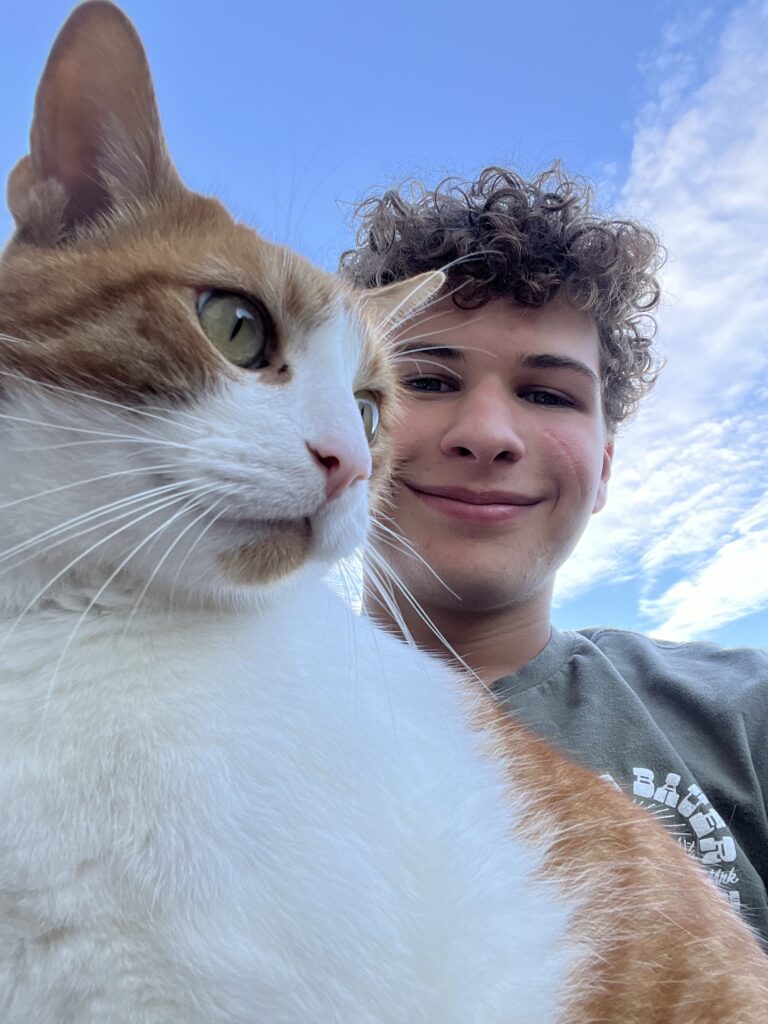
Hello all! My name is Robby, and to all who have gotten to know me over the years, I am considered more of an aquatic being. I particularly love the sport of swimming . Swimming has taught me the discipline needed to achieve my goals as well as the confidence to lead a team forward into the future. the sport has also kept me focused on my studies as I practice a life of rigorous scheduling. I have formed great friendships with my teammates both in and out of the pool that I still hold to this day. After long days filled with academic study, nothing helps me decompress quite like the cool, quiet, calm water. Once my mind is clear, I am ready to push myself as hard as possible to improve my times at swim meets, a task more important than ever now that I swim at the collegiate level.

<p>
  <img decoding=